
Lake Anna's public side vs private side, explained
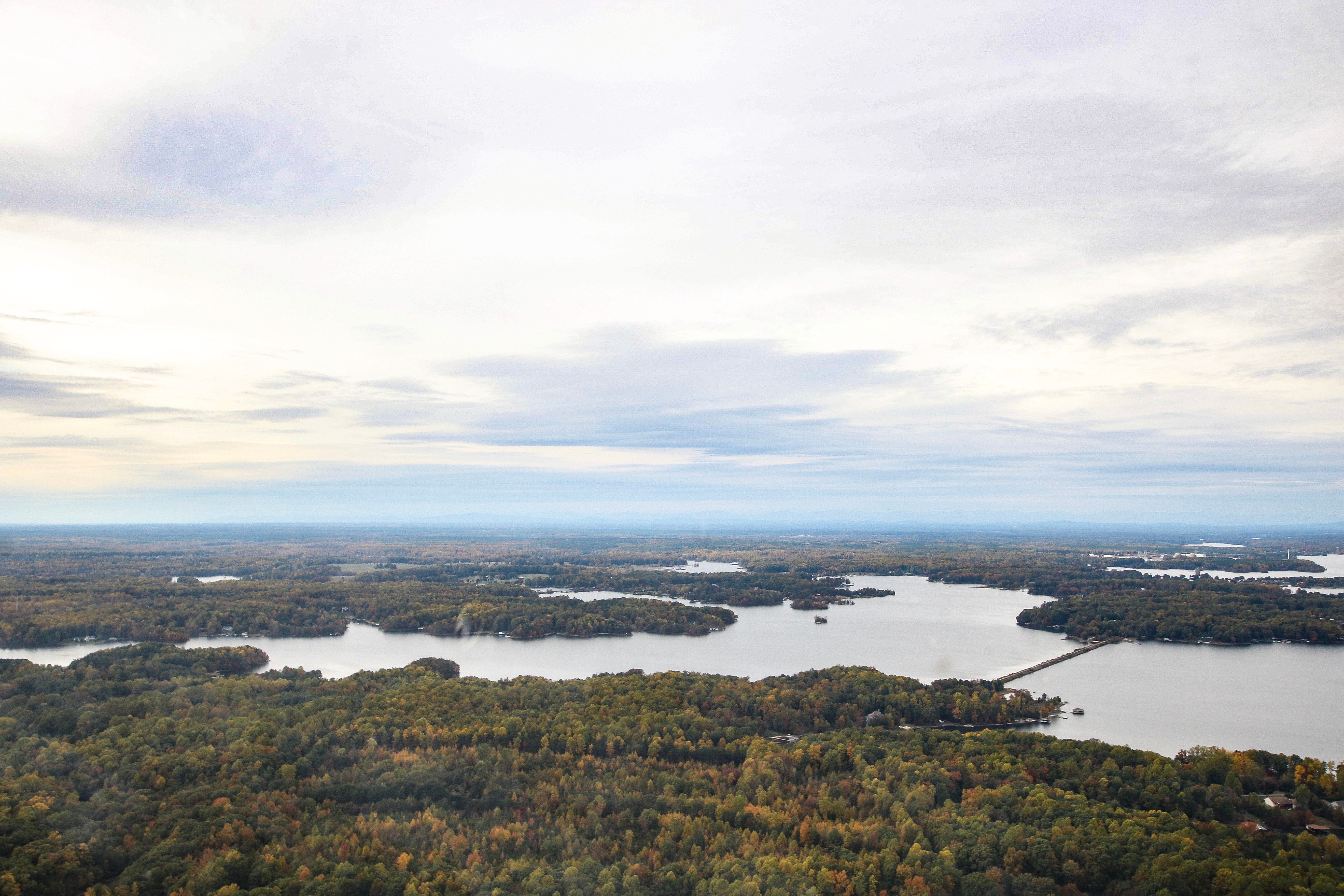
Ask anyone who knows Lake Anna where you should stay and the first question that comes back is the same: which side? It sounds like local trivia. It is actually the single most useful thing to understand before you book a house here, because the two sides of this lake work differently, look different, and offer a different weekend.
One lake, two jobs
Lake Anna exists because of the power station. In the early 1970s, Virginia Electric and Power Company dammed the North Anna River to create a cooling reservoir for the North Anna Power Station, and a lake of about 13,000 acres with more than 200 miles of shoreline filled in behind it. Hurricane Agnes did the lake a favor in 1972, filling it about a year and a half ahead of schedule. Half a century later, the power station still does its quiet work at the middle of the lake, and the lake has become one of Virginia's favorite places to spend a summer.
The engineering is what split the lake in two. On the south shore, dikes were built across a series of tributaries to create separate lagoons. Water leaves the power station warm, moves through those lagoons by way of connecting canals, cools as it travels, and returns to the main lake. Those lagoons are what locals call the private side, or the warm side. Everything else, roughly three quarters of the lake, is the public side.
The private side
The private side is made up of three lagoons and covers roughly a quarter of the lake's surface. Because it holds the power station's discharge water, it runs noticeably warmer than the main lake, which stretches the swim season by weeks on either end. That is the draw, and for the people who own homes there, it is a real one.
The catch is in the name. There are no public boat ramps on the private side. Getting a boat onto that water requires access through one of the neighborhoods that border it, which means the private side is effectively reserved for the people who live there and their guests. There is no state park on that side, no marina to rent a pontoon from, no restaurant to dock at for lunch. It is warm, and it is quiet, and it is closed.
The public side
The public side is the main lake, and it is where Lake Anna actually happens. The marinas are here, so this is the side where you can rent a pontoon or a pair of jet skis for the day. Lake Anna State Park is here, with its lifeguarded beach, fishing pier, and better than 15 miles of wooded trails. The dock-up restaurants are here, so dinner can be a boat ride instead of a car ride. The open water runs long and wide, which is what you want if anyone in your group plans to ski, tube, or wakeboard.
This is also the side with range. Big open water down the middle, and hundreds of small coves along the edges where the water goes still and the morning kayak paddle feels like you have the lake to yourself.
So which side should you stay on?
If you own a home on the warm side, enjoy it. But if you are renting for a week or a weekend, the honest answer is that the public side gives your group the whole lake instead of a lagoon. Boat rentals, the park, the beach, lunch by water, open water for the tube: all of it lives on the public side. You trade a few degrees of water temperature for everything there is to actually do here.
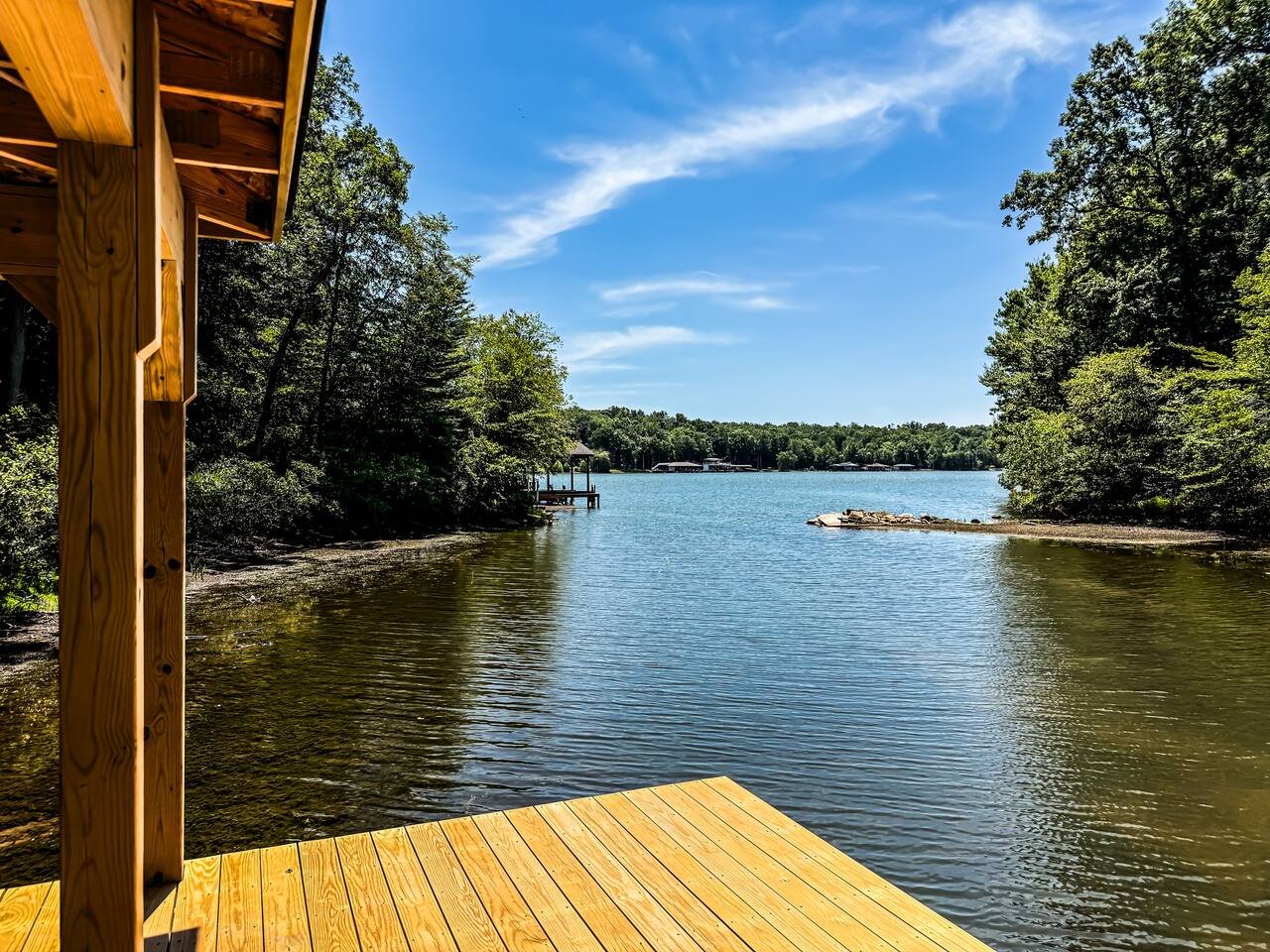
Where Lakewood sits
Lakewood is on the public side, tucked into the hardwoods directly across the water from Lake Anna State Park, with a private covered dock pavilion and inflatable kayaks waiting on 250 feet of shoreline. The marinas and dock-up restaurants are a short ride up the lake, and the park beach is close enough to paddle toward. Every day is Saturday at Lakewood.
